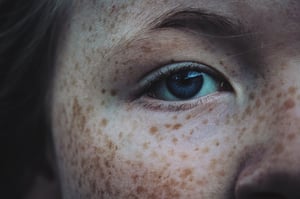
Noticed a new mole after 30? In many cases, it’s completely harmless. However, because new moles become less common as we age, any new or changing spot should be checked by a doctor experienced in skin cancer detection.
Is it normal to develop new moles after 30?
Yes, it is possible to develop new moles in adulthood.
Most people develop the majority of their moles during childhood and adolescence, but new moles can still appear later in life. Genetics, sun exposure and hormonal changes can all contribute.
While many new moles are benign, a new mole after 30 deserves attention because melanoma can sometimes appear as a new spot rather than a change to an existing mole.
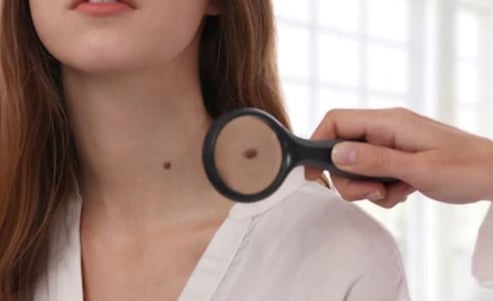
What causes new moles to appear?
There are several reasons why you may notice a new mole, including:
- Sun exposure and cumulative UV damage
- Genetic predisposition
- Hormonal changes
- Age-related skin changes
Some spots that look like moles may also be freckles, seborrhoeic keratoses or other benign lesions.
When should you be concerned about a new mole?
A new mole should be assessed if it:
- Changes in size, shape or colour
- Has an irregular border
- Contains multiple colours
- Becomes itchy, sore or tender
- Bleeds or crusts
- Looks different from your other spots
These changes do not necessarily mean skin cancer, but they are signs worth having checked.
The ABCDE signs of melanoma
Doctors use the ABCDE rule to identify suspicious moles:
- A – Asymmetry: One half does not match the other
- B – Border: Edges are irregular, blurred or jagged
- C – Colour: Multiple shades of brown, black, red, white or blue
- D – Diameter: Larger than 6 mm
- E – Evolving: Changing in size, shape, colour or symptoms
If a spot is changing, it should be examined by a doctor.
Do all melanomas start as moles?
No. Some melanomas develop in existing moles, while others appear as entirely new spots.
This is why it is important to pay attention to any lesion that looks unusual or different from the rest of your skin.
Benign mole vs suspicious mole
| Benign mole | Suspicious mole |
|---|---|
| Symmetrical | Irregular shape |
| Even colour | Multiple colours |
| Smooth border | Ragged border |
| Stable over time | Changing over time |
| No symptoms | Itchy, bleeding or crusting |
Other common skin lesions that can appear after 30
Not every new spot is a mole. Common benign lesions include:
- Seborrhoeic keratoses
- Solar lentigines (age spots)
- Cherry angiomas
- Skin tags
A skin check can help determine exactly what you are seeing.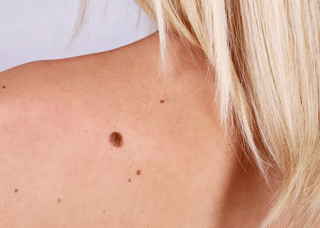
What should you do if you notice a new mole?
The safest approach is to have it assessed by one of our doctors.
Doctors trained in skin cancer medicine use dermoscopy to examine spots more closely and determine whether they are benign or need further investigation.
How often should you have a skin check?
For most adults, an annual skin check is recommended.
More frequent checks may be advised if you have:
- A personal history of skin cancer
- A strong family history of melanoma
- Fair skin or significant sun exposure
- A large number of moles
Frequently asked questions
Is it normal to get new moles after 40 or 50?
Yes, but it becomes less common with age. Any new mole should be assessed, especially if it is changing.
Can stress cause new moles?
Stress is not a direct cause, although hormonal changes and increased awareness of your skin may lead you to notice spots more often.
Are raised moles dangerous?
Many raised moles are harmless. What matters most is whether the spot is changing or looks unusual.
Do all melanomas look dark?
No. Melanoma can be brown, black, pink, red or even skin-coloured.
When to book a skin check
If you have noticed a new or changing mole, booking a professional skin check is the best way to determine whether it needs treatment.
Early detection can make treatment simpler and significantly improve outcomes.
Book a skin check online today.
References
- Cancer Council Australia. Skin cancer and melanoma information.
- Healthdirect Australia. Moles and skin cancer symptoms.
- Australasian College of Dermatologists. Information on moles, melanoma and skin cancer.
- The Royal Australian College of General Practitioners (RACGP). Clinical guidelines for skin cancer medicine.
- Melanoma Institute Australia. Patient resources and melanoma education.
